 The Technology
Home Page Sitemap About Foreword Oil 2.0 Cheaper Than Coal? The Technology Footnotes & Links
StoppingClimateChange.com
The Technology
Home Page
Sitemap
About
Foreword
Oil 2.0
Cheaper Than Coal?
The Technology
Footnotes & Links
Site Facilities: 1 Unneeded Old Coal Power Plant
2 New Electricity Generator
Building
Power Plant: 3 Power Plant Choices
3a Pilot Plant Power Drop CC:
3b Natural Gas
3c Hybrid CO2 Nuclear:
3d GA 1,560°F
3e NuScale 550°F 3f ThorCon 1,300°F 3g Terrestrial 1,300°F
Fuel Feedstock:
4 Hydrogen and Steam
Generators 5 Biomass Preparation
6 Plasma Torch Biomass Gasifier
Refinery: 7 Biosynfuel Refinery
8 Biosynthetic Fuels
8a Cellulosic E85 BioEthanol
8b Cellulosic M70 BioMethanol
8c Cellulosic BioDiesel
8d Green Hydrogen
The Technology: Using
Carbon-captured Or
Nuclear Energy to Replace
Fossil Fuels with Cellulosic Biosynfuels

The original heat engine.
________________________________________________________________
Introductory Concepts
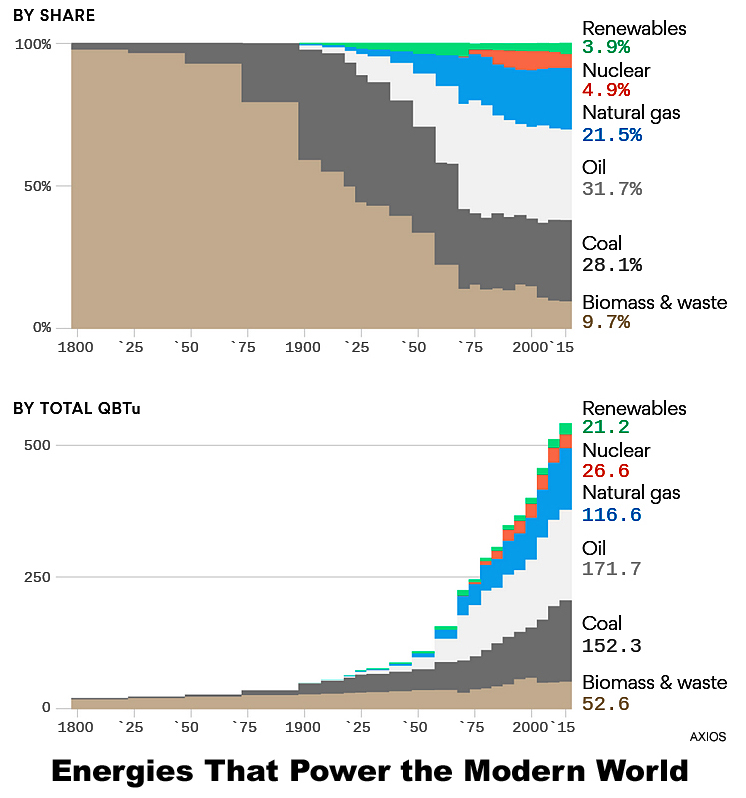
(Above) How the world's energies have changed in amounts
and kinds since the beginning of the industrial revolution.
Energy from biomass, nuclear, and renewables do not cause Climate Change.
Coal, oil, and natural gas cause Climate Change.
Who came up with these ideas? The Energy Park idea draws its fundamental concepts from
two different, but complementary, source documents:
1.,
Dr. Charles Forsberg's "Nuclear-Hydrogen-Biomass System"
(Oak Ridge National Laboratory - U.S. DOE) and
2.,
Dr. George A. Olah's "Beyond
Oil and Gas: The Methanol Economy".
The Energy Park idea's Bottom Line: Use Dr. Forsberg's Nuclear-Hydrogen-Biomass
System to manufacture
Dr. Olah's Carbon-Neutral Biosynfuels to replace all commonly used fossil combustion fuels.
________________________________________________________________

1. Dr. Charles Forsberg's "The Nuclear-Hydrogen-Biomass System."
In 2007, Dr. Forsberg, a chemist and nuclear
scientist from MIT and Oak Ridge Laboratories, prepared a slide show and
academic paper to present a related concept to the Annual Meeting of the
American Institute of Chemical Engineers .
Nuclear-Hydrogen-Biomass System - Slides - Dr Charles W. Forsberg .pdf
Quick slide show overview.
Nuclear-Hydrogen-Biomass System - Paper - Dr Charles W. Forsberg .pdf
Paper.
(ABSTRACT)
Meeting U.S. Liquid Transport Fuel Needs with a Nuclear-Hydrogen-Biomass System
Charles Forsberg
Dr. Forsberg's view: "The two major energy challenges for the United States
are (1) replacing crude oil in our transportation system and (2)
eliminating greenhouse gas emissions.
A strategy is proposed to meet the total liquid-fuel transport energy needs
within 30 years by producing greenhouse-neutral liquid fuels using biomass
as the feedstock and nuclear energy to provide the heat, electricity, and
hydrogen required for operation of the biomass-to-fuels production
facilities.
Biomass is produced from sunlight, atmospheric carbon dioxide, and water.
Consequently, using liquid fuels from biomass has no net impacts on carbon
dioxide levels because the carbon dioxide is being recycled to the
atmosphere when the fuel is burnt. The U.S. could harvest about 1.3 billion
tons of biomass per year without major impacts on food, fiber, or lumber
costs.
The energy content of this biomass is about equal to 10 million barrels of
diesel fuel per day; however, the actual net liquid-fuels production would
be less than half of this amount after accounting for energy to process the
biomass into liquid fuel. If nuclear energy is used to provide the energy in
the form of heat, electricity, and hydrogen to support biomass growth and
conversion to liquid fuels, the equivalent of over 12 million barrels of
greenhouse-neutral diesel fuel per day can be produced. The combination of
biomass and nuclear energy may ultimately meet the total U.S. transport fuel
needs."
- (Copy of text on slide 33, above, by Dr. Charles W. Forsberg.)
Conclusion:
There is sufficient biomass to meet U.S. liquid-fuel needs if the energy and
hydrogen inputs for biomass-to-fuel processing plants are provided by
advanced nuclear energy.
________________________________________________________________
2. In 2006, Nobel Prize winning energy chemist, Dr.
George A. Olah, published his influential book: "Beyond Oil and Gas: The Methanol Economy."
(New edition coming out in July, 2018)

Dr. Olah and his co-authors explored the
different fuels that could be made from captured carbon dioxide;
how they would be made, their advantages, shortcomings, and potential problems.
https://www.amazon.com/Beyond-Oil-Gas-Methanol-Economy/dp/3527324224
Beyond Oil and Gas - Literature Seminar - Lit_T_Matsumoto_B4.pdf A Japanese slide show presenting a quick overview of Dr. Olah's book.
Beyond Oil and Gas - Methanol Synthesis - Summary by George Olah.pdf Dr. Olah's comments on Methanol Synthesis.
Beyond Oil and Gas - The Methanol Economy - Slide Presentation -
R-Prakash-USC-May2014.pdf A more detailed
presentation.
Dr. Olah's view: Liquid hydrocarbons are a cheaper, safer, and
more energy-dense way to store, handle, and use combustion
energy than gaseous fuels such as hydrogen.
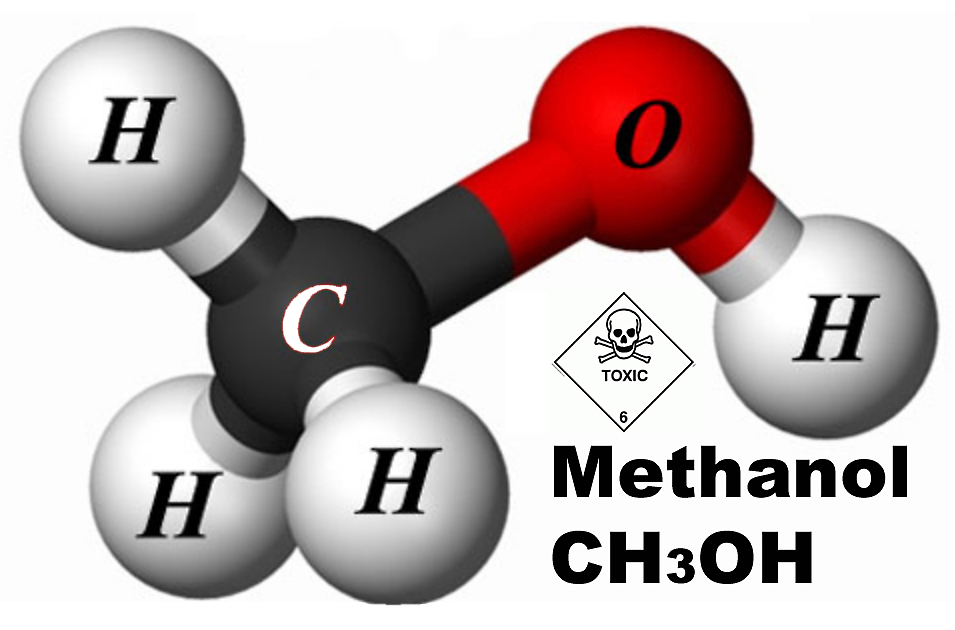
Methanol can be a carbon-neutral lowest common denominator liquid combustion
fuel for making most of the other liquid and gaseous fuels along with
many other substances.
________________________________________________________________
A few of the images used in this website
used to communicate energy's complex technical concepts.
(Click to enlarge.)



 <
"Recycled Fire", this website's logo.
The key is to use nuclear molten salt's electricity and
very hot heat lavishly to solve Climate Change
energy problems.