The world produces and consumes about 100 million barrels of oil per day - or
about 36,500 million (36.5 billion) barrels of oil per year. Since the standard 42
gallon barrel of oil weighs 275 pounds - or about 0.138 tons (275lbs per barrel
/ 2000lbs per ton = 0.138tons per barrel), this means the world is burning about
5 billion tons of oil per year (36.5 billion barrels * 0.138 tons/barrel).
The United States consumes about 20 million barrels of oil per day - or about
7.3 billion barrels of oil per year - or about 1 billion tons of oil per year.
So the report above has us covered.
(As always, the Devil is in the details.)
And the above is just from tree trimmings, etc. Also "Metropolitan Solid Waste
or MSW", better known as city garbage, city and septic tank sewage, feedlot
agricultural waste, "Black Liquor" boiler fuel from paper mills (they can use
the tiny nuclear reactors instead for heat and electricity). Since we're running
on nuclear heat, in case we have too much water in the plasma torch mix, drying
things out without too much cost or emissions should be feasible.
(Left) Carbon Dioxide produced per million British Thermal
Units (BTU) of heat.
(Right) Combustion Fuel Candidates
How to think about replacing the fossil fuels that have
served mankind so well for so long?
Job #1: Replace coal with nuclear. (The worst at 206
pounds of CO2 per million BTU.)
Job #2: Replace oil with cellulosic biosynthetic combustion fuels. (161 pounds
of CO2 per million BTU.)
Job #3: Replace natural gas with biosynthetic hydrogen heating gas. (117 pounds
of CO2 per million BTU.)
As you can see from above, wood (cellulose) is really loaded with carbon-neutral
carbon that can make a lot of biosynthetic liquid fuel per BTU. This is why your
author selected the electrically powered plasma gasification column instead of
the autothermal incinerating gasifiers. Captured CO2 in cellulose is too
damn valuable to burn.
Replacing coal with nuclear to make electricity
is the easy part.
Replacing oil and heating gas with CO2-neutral
biosynthetic fuels is the hard part. How much will we need to make?
We will need about 8,000 or so Clean Energy Park facilities
like the one this website is talking about to replace coal (with nuclear) and
oil (with biosynfuels). This website's facility is limited by it's plasma torch
column to gasifying a maximum of 200 tons of cellulosic biomass per day. It has
to share it's 500 megaWatt(e) nuclear electricity generator with a
thermochemical hydrogen generator and whatever electrical and thermal energy the
catalytic biosynfuel refinery requires along with the electricity demand of the
park's nearby cities.
There is a diversity factor over the plant's 24 hour/7day
per week operating cycle that may make predictable peak energies available:
(Above) A ThorCon dual reactor installation is good for 250 +
250 megaWatts maximum. Not all that big when you consider the heat load
presented by
chemical water splitting and energy needed to control catalytic hydrocarbon molecule
joining. Fortunately, both hydrogen and oxygen can be stored for later use.
Looks like making biosynfuels will be a night job for the
ThorCons.
Greenway Technologies Inc. and
INFRA Technology LLC, through its wholly-owned subsidiary, Greenway
Innovative Energy (GIE), have
signed a non-exclusive Memorandum of Understanding (MOU) to jointly
design and deliver Gas-to-Liquids (GTL) plants combining their respective
proprietary technologies: INFRA’s xtl and GIE’s G-Reformer.
INFRA Technology group has developed and patented a proprietary
Gas-to-Liquids (GTL) technology (INFRA.xtl), based on the Fischer-Tropsch
synthesis process, for the production of light synthetic oil—which is close
to a product, characterized by Shultz-Flory alpha of 0.77—and clean liquid
synthetic transportation fuels from natural and associated gas, as well as
from biomass and other fossil fuels (XTL).
INFRA has commissioned its own production of the proprietary
Fischer-Tropsch catalysts. Production capacity is up to 30 tons per year.
GIE has developed and patented a transportable, scalable and economic
converter for synthesis gas generation needed to feed an F-T reactor called
the G-Reformer.
In addition to these necessary components, building GTL plants requires
the leadership and financial discipline of an Engineering Procurement
Contractor (EPC) to deliver on-time and on-budget build programs. GIE has
been working with Audubon Engineering for several years and named the
company its EPC firm in 2018.
The agreement addresses the need to process various natural gas streams
into liquid fuels. There are worldwide initiatives underway to reduce the
amount of flared and vented gases which waste valuable natural resources and
contribute to CO2 emissions.
By combining the capabilities of both companies, the time to deploy
plants capable of processing flared or vented gas will be reduced. GTL
systems from the companies can also be used to process coal and biomass
assets providing the ability to convert these natural gas streams into
useable products including diesel, gasoline, and jet fuel. These fuels,
derived from natural gas, will be incrementally cleaner than similar
petroleum-based fuels.
Currently, INFRA’s team is performing start-up operations on a 100 bpd
demonstration plant (M100) located in Wharton, Texas. The company’s plant
will convert natural gas to SynCrude, with components of diesel, gasoline,
and jet fuel. This demonstration plant has a modular design that will allow
integration of other components for testing, such as the G-Reformer
technology from GIE, and the catalysts that produce varying fractional
amounts of end-product for sale.
This plant also provides the scalable design baseline for larger plants
and serves as an economic model for the technology, process, and design
proof.
Comments
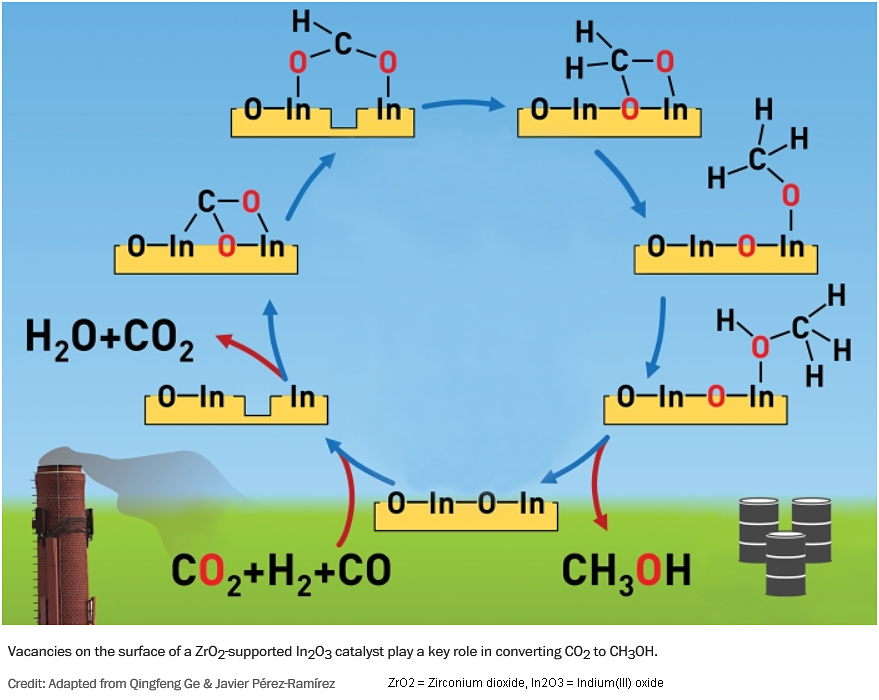
A pilot plant size methanol synthesis facility.
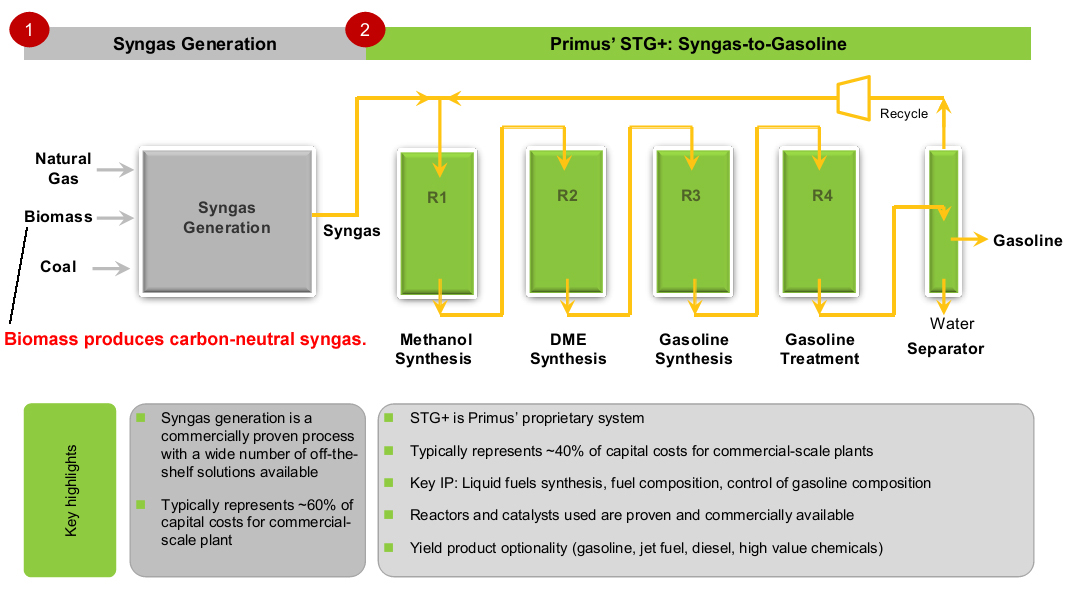
A nuclear reactor powered Energy Park
size M80 methanol, M10 gasoline, and diesel synthesis facility.
In general, this facility would be defined by local and
national building and electrical codes, and supplemented by constraints from the
relevant equipment manufacturers.
The particular biosynfuel refinery being contemplated here is new territory with the material below providing some insight on how they
might be designed.
This website is a draft. The candidate document's footnote numbers go with a
private database. Copy the document's title and submit it to Google. The
document may still be posted on the Internet.
2.701 ----- Biomass Companies
2.702 ----- BIOSYNGAS - Description of R&D trajectory necessary
to reach large-scale implementation of renewable syngas from biomass
2.703 ----- COST ESTIMATE for biosynfuel production via
biosyncrude gasification
2.704 ----- Methanol Overview - Chemistry and Manufacture - ppt
2.705 ----- Why Syngas to make Methanol - Methanol to Gasoline
Production - ppsx
2.706 ----- 16.602 ----- Large-Scale Pyrolysis Oil Production -
A Technology Assessment and Economic Analysis
2.707 ----- 16.603 ----- Production of Bio-methanol - Technology
Brief
2.708 ----- 16.604 ----- PRODUCTION OF BIO-METHANOL
2.709 ----- 16.605 ----- Methanol as an alternative
transportation fuel in the US - Options for sustainable and or energy-secure
transportation
2.710 ----- 16.606 ----- Cost-competitive, efficient
bio0methanol production from biomass via black liquor gasification
2.711 ----- 16.607 ----- Market Study for the Production of
Second Generation Bioliquids
2.712 ----- 16.608 ----- Biomethanol as a second-generation
biofuel for transportation
2.713 ----- 16.609 ----- Biomethanol Production and CO2 Emission
Reduction from Forage Grasses, Trees, and Crop Residues
2.714 ----- 16.610 ----- What is Biomass
2.715 ----- 16.611 ----- IEAGHG Information Paper - 2016-IP4 -
Developments in Renewable Methanol Production
2.716 ----- 16.612 ----- Turbomachinery in Biofuel Production
2.717 ----- 16.613 ----- Biofuels sources, biofuel policy,
biofuel economy and global biofuel projections
2.718 ----- 16.614 ----- World's first Commercial Scale
Biomethanol Plant in Hagfors SWEDEN
2.719 ----- 16.615 ----- FEMA Emergency Wood Gasifier
2.720 ----- 16.616 ----- FEMA Emergency Power Systems for
Critical Facilities - A best Practices Approach to Improving Reliability
2.721 ----- 16.617 ----- Iowa State to manage biorefinery
projects for new Manufacturing USA Institute
2.722 ----- Computer Modeling A Methanol Production Process ppt
2.723 ----- Methanol Institute Presentation Slide Presentation
2.724 ----- BLACK LIQUOR - Fact Sheet
2.727 ----- Enerkem, NREL team develops High Octane Low Carbon Gasoline (HOLCG)
hydrocarbon blends
(Below) Notice that all the different
fuels illustrated below are simply different combinations
of carbon and hydrogen.
That means we can make them ALL with the ingredients available at
Clean Energy Parks.
The biosynfuel processes being examined here are both existing
and new territory with the material below providing some insight on how they
might be designed.
Emissions are not just about carbon dioxide (CO2). In
addition to being fire hazards forever, batteries make a whole bunch of
environment-damaging emissions also.
Carbon-neutral replacement fuels take advantage of all the combustion emission
achievements that took so much time and money to develop in the past.
This website is a draft. The candidate document's footnote numbers go with a
private database. Copy the document's title and submit it to Google. The
document may still be posted on the Internet.
2.806 ----- Production of Hydrogen and Synthesis Gas by High
Temperature Electrolysis
2.807 ----- Bringing biofuels on the market - Options to increase EU biofuels
volumes
2.808 -----
2.809 ----- Bio-Methane and Bio-hydrogen
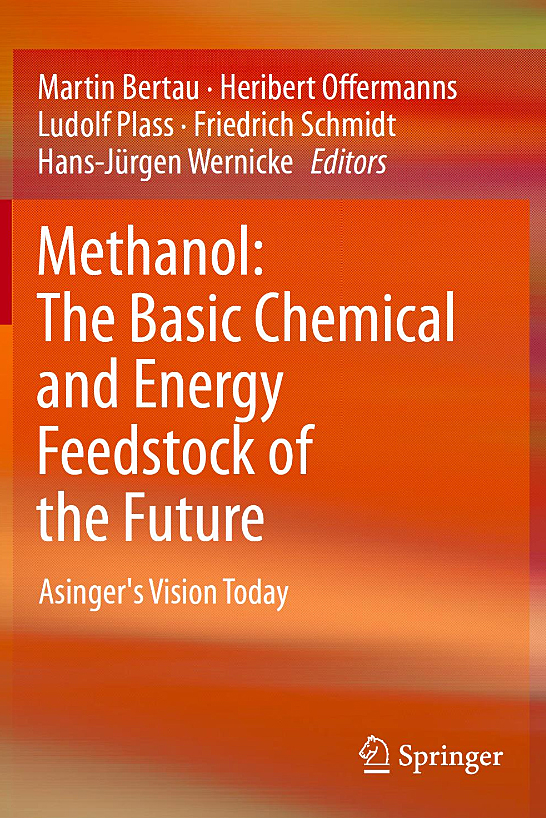
2.810 ----- Methanol - The Basic Chemical and Energy Feedstock
of the Future - Index Only
2.811 ----- Alternative Energy and Feedstock Sources in the Current Chemical
Landscape - the Methanol Perspective
2.812 ----- Application of Power to Methanol Technology to Integrated Steelworks
for Profitability and CO2 Reduction
2.813 ----- A Novel Condensation Reactor for CO2 to Methanol Conversion for
Storage of Renewable Electric Energy
2.814 ----- European chemistry for growth - Unlocking a competitive, low carbon
and energy efficient future
2.815 ----- Evaluation of Co-Gasification of Black Liquor and Pyrolysis Liquids
from a National Systems Perspective
2.816 ----- CO2 as Feedstock
2.817 ----- Production of Bio-methanol
2.818 ----- Biocatalytic Conversion of Methane to Methanol as a Key Step for
Development of Methane-based Biorefineries
2.819 ----- Methanol as an alternative transportation fuel in the US - MIT
2.820 ----- Petrochemical Outlook - Challenges and Opportunities - Prepared for
EU-OPEC Dialogue - Slide Presentatio
2.821 ----- China's use of fuel methanol and implications on future energy
trends
2.822 ----- The Methanol Story - A Sustainable Fuel for the Future
2.823 ----- The Future of Methanol Fuel - An analysis on the feasibility of
methanol as an alternative fuel
2.824 ----- Methanol as a New Energy Carrier






Comments