 7.
Nuclear Manufacture of Hydrogen
Front Page Directory Bulletin Board
SkyScrubber.com 7.
Nuclear Manufacture of Hydrogen
Front Page
Directory
Bulletin Board
Technologies: 1 Capitol Project: The Tools 2 Cooling Our Planet with Nuclear Power 3 Cooling Our Planet with BECCS Power 4 Cooling Our Planet with Geoengineering 5 The Class VI CO2 Disposal Well 6 Nuclear Desalination of Water 7 Nuclear Manufacture of Hydrogen
Nuclear Manufacture of Hydrogen
Introduction to this page:
What: 1.700.23 ----- Could mainstream hydrogen fuel use guarantee fossil
fuel dependence?
Where:
When:
Why:
How:
_______________________________________________________________________________________________________________________________________________________________
High Temperature Steam Electrolyzer - Wikipedia
https://en.wikipedia.org/wiki/High-temperature_electrolysis
____________________________________________________________________________________________________________________________________________________
Hydrogen-to-Carbon Ratios

____________________________________________________________________________________________________________________________________________________
Hydrogen as a Major Fuel

Hydrogen Power Paste: https://www.greencarcongress.com/2021/02/20210204-powerpaste.html 2.701.0.29
Also: Hydrogenious’ LOHC technology bonds hydrogen molecules to the organic carrier (dibenzyltoluene) via an exothermic catalytic process. The uptake is 57 kg of H2 per cubic meter LOHC. The LOHC remains is a liquid state across a broad temperature range (-39 to +390 ˚C) and ambient pressure. It is thus transportable using conventional fuel infrastructure.
Dehydrogenation—the release of the H2 from the carrier—is an endothermic process with about 11 kWhth/kgH2 required at 300 ˚C. Construction of the world’s largest project plant for storing green hydrogen in LOHC begins in Germany 2.701.0.30
_______________________________________________________________________________________________________________________________________________________________
Hydrogen Can Be Transported Like Liquefied Natural Gas

Classification society ClassNK has
issued an Approval in Principle (AiP) to Kawasaki Heavy Industries for the
design of a cargo containment system (CCS) of the world’s largest capacity
(40,000 m3 class per tank) developed for use on a large liquefied
hydrogen carrier.
The CCS for which the AiP was obtained is designed to contain cryogenic
liquefied hydrogen, reduced to a temperature of -253 °C and one eight-hundredth
its initial volume, for shipping by sea in large amounts. This containment
system has the largest capacity of its kind worldwide used in liquefied hydrogen
marine transport.
The CCS was developed using design, construction and safety technologies
fostered through building of the Suiso Frontier, a pioneering liquefied
hydrogen carrier built by Kawasaki that offers a 1,250 m3 carrying
capacity. In addition, the CCS utilizes a new type of insulation structure.
_______________________________________________________________________________________________________________________________________________________________
High Temperature Steam Electrolyzer - Wikipedia
https://en.wikipedia.org/wiki/High-temperature_electrolysis
_______________________________________________________________________________________________________________________________________________________________
Cost and
Capacity Factors are the Keys to Enabling Hydrogen's Decarbonization Of Energy
Like Electricity,
Hydrogen Will HAVE TO BE DISPATCHABLE


Cost and Capacity Factors are
the Keys to unlocking Hydrogen-driven Decarbonization
Intermittency of supply will not be tolerated
As of 2019, there were 281 active shipyards
in the world.
The full substitution of the oil and gas industry by clean synthetic fuels can
be accomplished from the dedicated production of 64 large shipyards.
(2.350.01, Figure 10)
Researchers develop large-scale, economical method to extract
hydrogen from oil sands and oil fields.
(2.350.03)
https://www.greencarcongress.com/2019/08/20190820-proton.html
_______________________________________________________________________________________________________________________________________________________________
High
Efficiency 77 megaWatt(e) NuScale Nuclear Power Module Hydrogen Manufacturing
Facility
NOTE: This article was extracted from the pdf
"EXTENDING NUCLEAR ENERGY TO NON-ELECTRICAL APPLICATIONS" by D. Ingersoll, et
al, August 2014, at the 19th Pacific Basin Nuclear Conference (PBNC 2014).
1.202.09

Hydrogen Production
As demonstrated in the previous two studies, the thermal energy produced by an LWR may be
used for low-to-moderate temperature processes such as water desalination and petroleum refining. It can also be used to produce hydrogen and oxygen via steam electrolysis. The U.S. currently uses over 12 million tons of hydrogen each year for fertilizer production, petroleum and metals refining, and the food industry. Additionally, the build-out of an unconventional hydrocarbon fuels industry in the U.S. and China, in which coal is converted to advanced liquid fuels, will need millions of tons of clean hydrogen per year to avoid excessive carbon emissions and to better steward fossil fuels and biomass resources. The anticipated eventual penetration of fuel cell technology into the transportation sector will create a substantial additional demand for hydrogen but will only have a significant impact on GHG reduction in this energy sector if the hydrogen is produced using carbon-free sources of energy.In general, hydrogen can be produced by stripping it from a hydrocarbon fuel such as methane
or by splitting water. Given the low cost of natural gas, steam-methane reforming is the most common method of producing hydrogen in the U.S. It requires combustion of roughly 10-15% of the methane in the feed stream to generate the heat and steam necessary to split the remainder of the methane; consequently, the resulting emission of CO2 is a concern. Alternatively, electrolysis can dissociate water or steam into a clean source of hydrogen and oxygen. High-temperature steam electrolysis (HTSE) is an emerging technology and is ~40% more efficient than conventional water electrolysis.A study was conducted to establish a cost baseline for producing hydrogen when supplying
heat and electricity to an HTSE process. The results of the study help evaluate the market case for producing hydrogen, either as a standalone hydrogen/oxygen plant or with load management within a hybrid energy system. The ASPEN HYSYS code was used to model integration of a NuScale reactor module with a Rankine power cycle and a co-located HTSE plant. HYSYS allows for accurate mass and energy balances and contains all of the fundamental process components in the plant, e.g., compressors, turbines, pumps, valves, and heat exchangers.In this case study, heat and electrical power produced by a NuScale power module (NPM) was
directly routed to a proportionally scaled HTSE unit operating at 800C. A tertiary steam loop by-pass was added to the NPM power cycle steam delivery loop to transfer heat to the HTSE plant. Condensate produced in the HTSE loop was recombined with the turbine condensate in the reactor feed water loop. All of the electricity produced by the NPM was directly supplied to the HTSE block. Figure 5 provides a simplified process flow diagram of a NuScale module coupled to an HTSE unit.Within the HTSE block, a custom heat recovery scheme was used to cool the hot hydrogen and
oxygen product streams in order to preheat the HTSE feed water and then to superheat the inlet steam and gas recycle flows. The HTSE steam loop delivered the heat necessary to boil and flash the preheated HTSE feed water and to partially superheat the high-pressure steam. A small amount of electrical power (1.15 MWe) from the NPM was needed to boost the inlet temperature of the HTSE feed steam and recycle gases to approximately 800C and the balance of electricity was used to electrolyze the high-pressure steam/hydrogen mixture.Table 4 provides a summary of the key mass/energy parameters.

The study showed that one 160-MWt NuScale module can optimally produce about 1,310 kg/hr (2,900 lb/hr) hydrogen and 10,400 kg/hr (23,000 lb/hr) oxygen using one matched-scale HTSE module. The hydrogen and oxygen product are 99% pure and no GHG are produced with this method of hydrogen/oxygen production. A medium-scale hydrogen production plant of about 200 tons/d hydrogen would require six NuScale modules. This scale of plant would readily produce sufficient hydrogen for a mid-size commercial ammonia production plant of approximately 1,150 tons/d,[7] a typical distributed-scale petroleum refinery of 40,000 to 50,000 barrels/d,[8] or a cluster of steel refining mills.
A standard parametric evaluation of the process economics was completed to determine the sensitivity of hydrogen/oxygen product costs to: hydrogen plant size, HTSE configuration, cost of electricity, capital costs, and internal rate of return on capital investment. The results of the economic assessment favor traditional natural gas reforming due to current U.S. natural gas costs and the mature reforming technology. A coupled NuScale-HTSE plant for hydrogen production may become competitive depending on several economic factors, including increased natural gas prices, carbon emission penalties, and optimization of the HTSE process. Also, a NuScale-HTSE plant can be coupled with wind and solar energy generators in a hybrid energy system that can allow greater penetration of the renewable sources while providing a carbon-free solution to large-scale electricity and hydrogen production.
Summary
The NuScale SMR plant design has been demonstrated to be well suited for expanding nuclear energy to a variety of non-electrical applications, including water desalination, oil refining, and hydrogen production. In all cases, the co-generation of electricity and process steam can be easily accommodated by the modular nature of the NuScale plant. The economic competitiveness of using a NuScale plant for these applications appears promising, but depends on many economic factors—most importantly the cost of natural gas and the penalty for carbon emissions. What is clear is that the NuScale plant design provides an attractive solution for clean, abundant and reliable energy for a wide range of energy customers.
_______________________________________________________________________________________________________________________________________________________________
90%+ Efficient Solid State Hydrogen Electrolyzer

Haldor Topsoe's above 90% efficient solid
state electrolyzer
_______________________________________________________________________________________________________________________________________________________________

_______________________________________________________________________________________________________________________________________________________________

A new method for obtaining
massive amounts of hydrogen has just been developed by the Canadians - Via
Injection of Oxygen into Depleted Oil Fields.
It is claimed to extract massive amounts of unpumpable oil's hydrogen while
leaving the oil's carbon in the ground.
The state of Michigan, currently the 17th largest producer of U.S. oil, could be
a prime candidate for such depleted oil field "Hydrogen Pumping".
_______________________________________________________________________________________________________________________________________________________________
High Temperature Steam Electrolyzer - Wikipedia
https://en.wikipedia.org/wiki/High-temperature_electrolysis
_______________________________________________________________________________________________________________________________________________________________
The Hydrogen Production Color Code

Hydrogen Gas - Origination Color Code
_______________________________________________________________________________________________________________________________________________________________
Report – Missing Link to a Livable Climate:
How Hydrogen-Enabled Synthetic Fuels Can Help Deliver the Paris Goals
Note readers: The report is formatted to be read best in landscape mode 2.701.0.33
To replace 100 million barrels of oil per day equivalent requires an investment of USD17 trillion, spent over 30 years from 2020 to 2050 or at an average rate of USD567 billion annually. (For comparison purposes, the total US defense budget in 2018 was USD618 billion) It follows that saving the planet won’t be cheap, but spending the money is better as an alternative to not having a livable planet.
The report notes that this level of spending is lower than the USD25 trillion investment otherwise required to maintain such fossil fuels flows in future decades, and contrasts with a USD70 trillion investment for a similarly sized renewables-to-fuels strategy.
“The potential of advanced heat sources to power the production of large-scale, very low-cost hydrogen and hydrogen-based fuels could transform global prospects for near-term decarbonization and prosperity.
While it sounds daunting to achieve the scale of production needed, the scalability and power density of advanced heat sources, including nuclear energy, are a major benefit. By moving to a manufacturing model with [small modular reactor] designs, it is possible to deliver hundreds of units in multiple markets around the world each year.” (Item from - https://neutronbytes.com/ 3/5/2021)
_______________________________________________________________________________________________________________________________________________________________
Korea-based SK Group will invest about 18 trillion won (US$16.4 billion) over the next five years to create a domestic hydrogen ecosystem—production, distribution, and consumption—through creation of domestic hydrogen infrastructure and also through partnerships with global companies.
In the first phase, SK E&S, SK Group’s hydrogen business promotion company, will invest about 500 billion won (US$446 million) to build a liquefied hydrogen (LH2) production plant with a production capacity of 30,000 tonnes of liquefied hydrogen. For this purpose, SK will use a site in the SK Incheon Petrochemical Complex in Wonchang-dong, Seo-gu, Incheon.
The LH2 plant will take byproduct gaseous hydrogen supplied from SK Incheon Petrochemical, purify it, process it into a liquid, and supply it to the metropolitan Incheon area. The first phase project is thus also one of the pillars of the Incheon city hydrogen cluster construction project. It is expected to become an important foundation for the expansion of hydrogen infrastructure at Incheon International Airport, Incheon Port, and industrial complexes.
In the second phase, SK will invest 5.3 trillion won (US$4.7 billion) by 2025 in a hydrogen production plant. The plant will produce 250,000 tons of hydrogen from liquefied natural gas while removing 250,000 tons of carbon dioxide through carbon capture and treatment technology.
Combined with the Phase 1 project, SK plans to produce and supply a total of 280,000 tons of eco-friendly hydrogen annually in Korea, and use these business experiences and capabilities to fully promote hydrogen business in Asia, including China and Vietnam.
In addition to supplying liquefied hydrogen, SK plans to make active investments in establishing a distribution system for eco-friendly hydrogen.
SK will operate 100 hydrogen charging stations nationwide by 2025 to supply 80,000 tons of liquefied hydrogen per year.
As part of this, SK is also discussing ways to cooperate in various fields to energize the hydrogen economy, such as establishing a liquefied hydrogen fueling station, expanding the introduction of hydrogen vehicles, and building a hydrogen experience center.
_______________________________________________________________________________________________________________________________________________________________
A Proposed Deeply Decarbonized Transportation Economy

_______________________________________________________________________________________________________________________________________________________________
Japan's Vision for a Deeply Decarbonized Energy Future

_______________________________________________________________________________________________________________________________________________________________
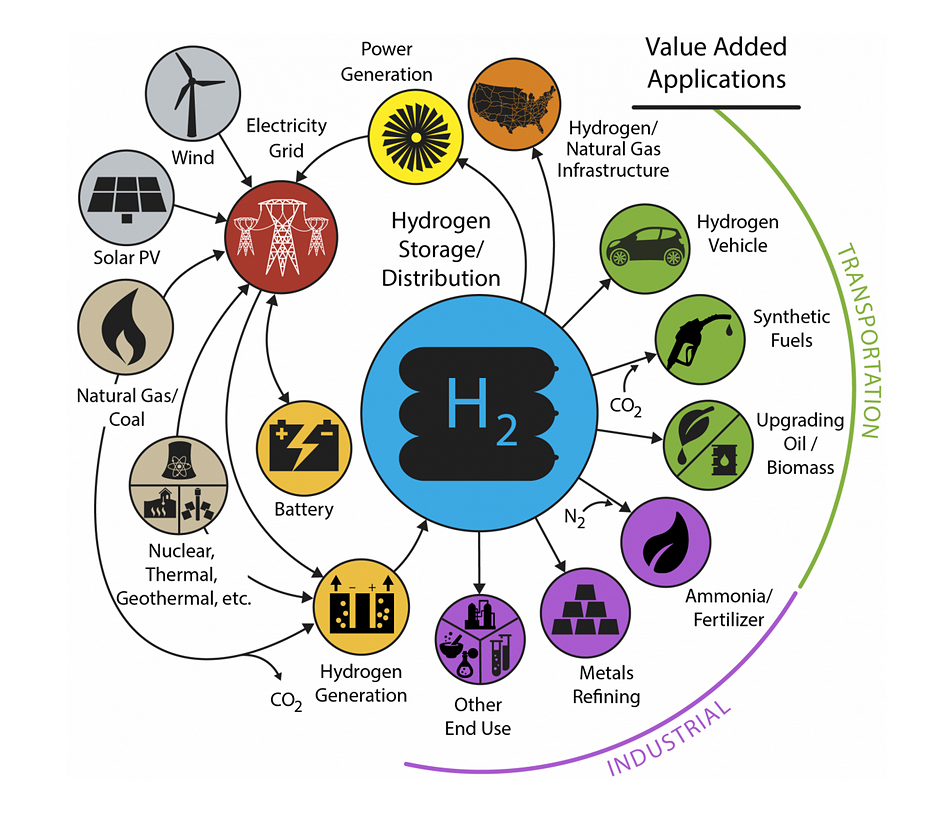
HYDROGEN

_______________________________________________________________________________________________________________________________________________________________
HYDROGEN
_______________________________________________________________________________________________________________________________________________________________
HYDROGEN

_______________________________________________________________________________________________________________________________________________________________