 Chapter
4: Electricity Decarbonization, Co-Firing Gas or Oil with Coal
Home & Index Page Sitemap About Prolog Introduction A Quick Tour Footnotes & Links
Air Contactor.com
Chapter
4: Electricity Decarbonization, Co-Firing Gas or Oil with Coal
Home & Index Page
Sitemap
About
Prolog
Introduction
A Quick Tour
Footnotes & Links
Co-Firing
EPA-Outlawed Coal Power Plants with Carbon Capture
Co-Firing
Hybrid Carbon-Captured Gas or Oil BASELOAD with Coal for PEAKLOAD
This is the only practical way to bring carbon capture
to every corner of the world in time to blunt Climate Change.
Hybrid
- The first step away
from coal: Cleaning Up The
World's EPA Outlawed Coal Power Plants
Stack emissions of fossil fuel power plants are
Coal: 12%, Oil:
7%, Natural Gas: 4%.
The configuration below lets you minimize the size (and the cost) of converting
coal baseload to EPA-compliant carbon capture.
(Downloaded Internet 152 page pdf Posting):
Federal Register, Vol. 80, No. 205, Friday,
October 23, 2015, Part II, Environmental Protection Agency, 40 CFR Parts 60, 70,
71,et al.
Standard of Performance for Greenhouse Gas Emissions From New, Modified, and
Reconstructed Stationary Sources: Electric Utility Generation Units; Final Rule
The above document has many comprehensive introductory presentations about coal
power plant CO2 emissions mitigation. Well worth printing and studying the
entire document carefully.
This web page is intended to illustrate an idea only.
Specific CO2 emission limit values will depend upon the specific coal burning
power plant unit under consideration and specific carbon capture load vs. coal
load operation.
Abstract
:
The following Dual-fuel Hybrid carbon capture systems are your author's offerings.
 (Above
- Just to illustrate the co-firing idea. Don't try this without discussing it with
your lawyers first.)
This might be the absolute minimum
system to gain compliance. Run the plant mostly on steam made from coal but add enough
steam made from carbon-neutral biodiesel to dilute the electricity's total CO2 emissions
down to equal or exceed EPA acceptance.
Hawaiian Electric advances the use of biodiesel as a gas-turbine fuel .pdf
How the amine scrubber works: https://www.youtube.com/watch?v=ZNzcMnOtBPE

Zero CO2
Emissions Oxyfuel
Steam Generator Teamed Up With Coal Peaking
Transitioning the world to getting the
big electricity civilization needs from clean carbon capture.
Cleaver Brooks, Inc.
http://cleaverbrooks.com/Products-and-Solutions/Boilers/HRSG/Slant/Index.aspx

(Above) Using carbon capturing for BASELOAD electricity while continuing to use coal for INTERMEDIATE and PEAK load times.
Every coal plant has an annual load distribution curve not terribly unlike the one above. Using the curve above as a generalized template, you can find a ratio between carbon captured steam and coal steam that will, over a year's time, match or better the EPA's pounds of CO2 per megaWatt-hour of gross electricity produced.
Example: If the coal CO2 component of your plant happens to produce 2,000 lb CO2 per mWh, and the EPA limit for this particular type of electricity generating unit is 1,400 lb CO2 per mWh, you need only to produce at the end of the year enough zero-CO2 carbon captured electricity to dilute the plant's total annual electricity CO2 emissions down to a level that is less than the EPA's CO2 emissions standard.
This should be achievable using equipment far smaller, cheaper, and less energy-consuming than what would be necessary to capture all the CO2 produced by the plant. - - Just thinking.
Example: Your author has a very typical (but real)
favorite boiler
and steam turbine generator in mind:
Boiler: Main Steam 1,106,000 lbs per hour at 1,890 psi and 1,005°F.
Reheated Steam 964,000 lbs per hour at 507 psi and 1005°F.
Generator: 160,000kW, 18,000 Volt, 3 phase, 60 cycle, hydrogen
cooled, static excitation.
According to the good folks at Linde Oxygen, it takes
about one ton of oxygen to make 1 megaWatt-hour of electricity.
(Click)

If we use the Wisconsin load demand chart above as a template, the author's
favorite steam plant would have about 3/7 (0.43) of its net capacity (0.43 x 160 mWh
or 69 mWh) dedicated to baseload. That means the oxygen plant should be
able to produce about 70 tons of oxygen per hour for the net electricity plus
about 16 additional tons to make the electricity needed to power the parasitic
losses caused by the carbon capture equipment. Perhaps 86 tons of oxygen
per hour.
That's a far smaller air reduction unit than the 160 + 40 = 200 tons per hour unit that
would be needed to enable 100% carbon capture.
Also, (0.43 + 0.11) x 1,106,000 lbs of steam per hour = 597,240 lbs/hr. Again, a far smaller HRSG (Heat Recovery Steam Generator) would be needed.
Depending upon your actual annual load profile and emissions, you might be able to meet your needs with 1/7 oxyfuel capacity. Taking this approach even further, simply powering the HRSG with biodiesel gives you carbon-neutral steam and you could skip the oxyfuel and carbon capture part.
AND, since the
coal steam part of your plant wasn't touched, bad carbon capture equipment days
would just be low emissions coal days.
INCREASING your PLANT'S TOTAL POWER OUTPUT
Sooner or later, you may consider replacing the ZEUS combustor with an aeroderivative turbine's combustors to increase the zero carbon dioxide emissions component of the electricity you can produce while re-using the existing oxygen generating equipment. The general HRSG system layout would be somewhat like the complete combined cycle system depicted below.
If you got a 86 mWh turbine-generator to use 100% of the oxygen you are making, the additional gross revenue, at $50 per mWh, would be (86 x 24 x 365) x $50 or $37,668,000 per year and the plant's net power output would go up to about 230 mW.
Right now, oxyfuel burning aeroderivative turbines are not yet available due to the different compression characteristics of CO2 vs. air, but since the expander in an aeroderivative turbine is designed for CO2, the turbine makers should be able to come up with a CO2 compressor turbine for a reasonable premium by the time oxyfuel carbon capture becomes common.
Expanding your emissions repertoire still further with fuel choices:

Cleaning up industrial grade carbon dioxide:

Some thoughts about U.S. CO2 pipelines.


_________________________________________________________________________________________________________________
How it all can come together:

(Above) Extending a salvaged coal power plant's site to a Hybrid CO2 Energy Park - taking advantage of nearby depleted oil fields (Below).
This is the only practical way to bring carbon capture to every corner of the world in time to blunt Climate Change.
_________________________________________________________________________________________________________________
About Using Michigan's Stranded Oil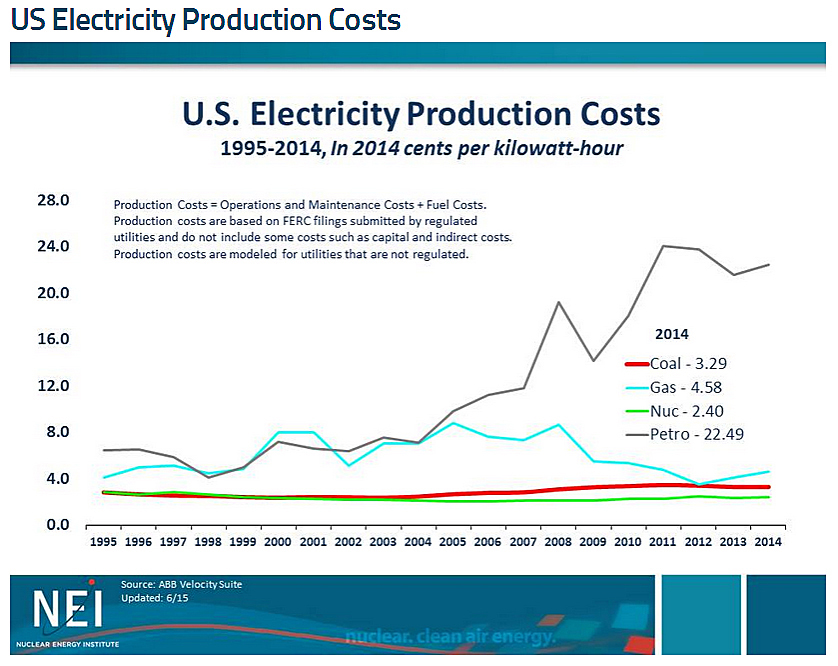

Time to think again about using oil instead of natural gas or coal. Taking advantage of the captured CO2. Stranded oil at a very deep discount?
Recently, almost 2 million barrels of CO2-EOR oil were recovered this way at Traverse City, Michigan, by CORE Energy Holdings, LLC. http://coreenergyholdings.com/
Using Michigan's stranded oil to make
Michigan's electricity with hybrid carbon capturing power
plants would be a big win-win for Michigan.
There is a staggering amount of oil available to be flushed out of abandoned non-producing American oil fields if we have enough CO2 to do it. Read about it: WMU EOR .pdf
Oil's "CO2 per BTU" emissions are halfway between coal and natural gas. See: Carbon to Hydrogen Ratio In Fuels .jpg
Everyone's thinking is we will replace old coal plants with wind and solar.
Things have changed even more than most people realize.
Many people in the electrical energy world find the idea of using oil to make electricity unthinkable. Cost and availability concerns since the 1970s has made oil very uncompetitive when compared to coal.
Oil recovery technology advances - fracking, tight oil, CO2-EOR, oil sands - over the last decade have radically changed the cost and availability outlook for American oil.
Recent assessments reveal
See:
Oil - Carnegie Oil Reserves Study - Original .jpg
Deep discount.
Also unthinkable to the Oil Energy
World is the concept of "Stranded Assets" - the idea that
they will have to abandon the mineral rights to oil and gas deposits
they currently own when the burning of fossil fuels is
eventually outlawed as a consequence of worsening
Climate Change.
This fear is real. See:
University of Oxford Smith School of Enterprise Stranded Assets Program:
H


(left) All Producing and Non-Producing Oil and Gas Wells. (right) Producing Only. Michigan is the U.S.' 17th largest oil producer.
It may be possible to dedicate nearby
stranded oil fields to hybrid carbon captured power plants assuring
decades of reliable electricity.
About CO2-EOR Oil


(Above) Global oil availability.
Oil is better suited for carbon capture since it is far cheaper to purify than coal and, like coal, is also available worldwide. The availability of natural gas as a super-clean fuel for carbon capture is not necessary. There is 24 times as much oil remaining in the ground as all the conventional pumpable oil mankind has burned since the age of oil began. If liquid carbon dioxide (CO2) is available from carbon-captured power plants, oil can be extracted to power those electricity plants from well-known depleted oil fields in virtually every part of the world.
CO2 Disposal
Known Safe Locations For Underground
Carbon Dioxide Storage.
Click To Enlarge
Many existing power plant site locations in the United States are directly over geological formations suitable for drilling an on-site CO2 disposal well. Global map of potential disposal sites.
If a Michigan power plant doesn't want to flush out oil with it's CO2, it can simply dispose of CO2 with a straight down well on the plant's property.
CO2 Disposal Potential In Michigan

_________________________________________________________________________________________________________________

(Above) Coal power plants impacted by EPA
CO2 Emission Rulings.

Lights = Cities = Coal Power Plants. The United
States is only about 1/4 of the Climate Change problem.
Think about the world's over 100,000 coal power generating units. More money is invested in the world's electrical systems than in any other industry. Most of them have only coal or oil available as fuels.
Few countries are so rich as to be able to convert their electrical systems to more expensive nuclear or wish to reduce their already meager electrical supplies by moving to feeble wind turbines or solar cells.
Most first and second world countries could afford to upgrade their power plants to carbon captured baseload electricity.
The best the Climate Change movement can hope for is the rational reduction of existing power plant CO2 emissions by carbon capturing the world's baseload electricity.
This is the only practical way to bring carbon capture to every corner of the world in time to blunt Climate Change.
_________________________________________________________________________________________________________________
Some background material.
Example of an old steam plant converted to combined cycle.
Bayside coal power plant was converted in 2003-2004 to natural gas powered jet engine combined cycle to increase total power while reducing total emissions. It can now generate 1,800 megaWatts of electricity with the combination of new jet and old steam generators.

(Above) H.L. Culbreath Bayside Power Plant, Tampa, Florida. (Google
Earth Image)
A salvaged coal plant with two old steam units being powered by 7 Heat Recovery
Steam Generators being heated by the exhaust blasts of 7 relatively small
aeroderivative jet engines. Note the long steam pipes from the HRSGs to
the old steam turbine gallery.
The smaller steam turbine is heated by 3 jet engines, the larger by 4.

(Above) Bayside HRSG row. The 7 white jet engine air intakes (left), 7 engines center, 7 heat recovery steam generators (right).

(Above) Modern power plants 101: How a classic combined cycle natural gas jet
engine powered power station works.
At least two electricity generators.
_________________________________________________________________________________________________________________
________________________________________________________________
________________________________________________________________

